
In the United States, the concept of “Chinese food” is too simplistic because it ignores the vast differences in types of Chinese food. Northern dishes are often wheat based and feature noodles as a staple, while southern dishes are rice based. There are officially 8 categories of Chinese food: Cantonese, Sichuan, Shandong, Jiangsu, Fujian, Hunan, Anhui, and Zhejiang. However, these 8 categories do not cover many other types of food in China, such as the food eaten in the western provinces that border Afghanistan, Tajikistan, Pakistan, Kazakhstan and Kyrgyzstan. There are thousands of different types of Chinese food, so this page is only a brief overview of some famous ones.
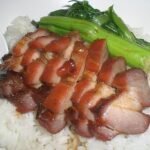 Cantonese cuisine is found in south east China in places like Hong Kong. It uses stir-frying, steaming, and roasting. Rice is a staple. It is not spicy and includes many seafood dishes. It uses seasonings sparingly, such as ginger and soy sauce. It focuses on leaner meats and vegetables. The photo on the right is Char Siu, a kind of roasted barbeque pork. Dim Sum is another famous Cantonese food, which includes small dumplings and buns. Steamed fish is very common, which is often grouper or sea bass, seasoned lightly with ginger and soy sauce. Bok Choy is another iconic Cantonese food, which is a kind of cabbage.
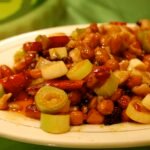
Sichuan cuisine comes from Sichuan Province in south west China. It is most famous for being extremely spicy. It uses a lot of peppercorns to numb the mouth followed by chili peppers for a powerful hotness. Mapo Tofu is tofu in a fiery hot sauce made from fermented black beans, chili oil, peppercorns, and minced beef or pork. The photo on the right is Kung Pao Chicken, which is stir-fried, diced chicken with peanuts, cucumber and chili peppers. Another well known dish is Dan Dan Noodles, which includes minced pork and bok choy covered in a spicy sesame peanut sauce.
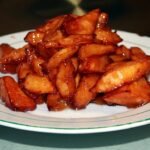
Shandong cuisine comes from Shandong Province in eastern China. It emphasizes seafood, bold and savory flavors, soups, and uses a lot of garlic and scallions, stir-frying and sweet and sour foods. The photo on the right is sweet potato with caramelized sugar. It uses a lot of abalone, prawns, scallops and scallions. Noodles, pancakes, and steamed buns are staples. Sweet and sour carp is a famous dish. A lot of dishes are salty and crispy. Dezhou Stewed Chicken is another famous dish, which is 300 years old. The chicken is deeply fried and then simmered in a spiced broth for hours, until the meat falls off the bone.
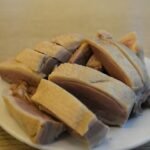
Jiangsu cuisine comes from the eastern coastal region of Jiangsu Province. It is known for artistic presentations of dishes with moderately sweet and salty flavors. The photo on the right is Nanjing Salted Duck. It’s a 2000 year old recipe that involves dry-brining the duck with salt and peppercorns and finally poaching it in a broth. It is served cold. Stewing, simmering, braising and steaming are signature cooking methods. Lotus root, winter bamboo shoots and water bamboo are common ingredients. Braised Dry Tofu, Lion’s Head Meatballs, and Yangzhou Fried Rice are three more famous foods from this category.
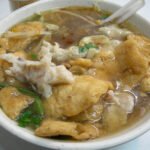
Fujian cuisine comes from Fujian Province in the south east of China. It is known for being light, fresh and flavorful while emphasizing seafood and soups. People sometimes say “no soup, no dish”. The photo on the right is a meat based Fujian Broth Soup. Fujian cuisine uses a lot of seafood, since it is located next to the ocean, and a lot of mushrooms, bamboo shoots and different types of fungi found in the mountains to the west. A lot of dishes use red yeast rice, wine lees and shrimp paste. Some famous examples include Oyster Omelet, Fuzhou Fish Balls, Lychee Pork, and Foutiaoqiang, a kind of stew containing various seafood and meats.
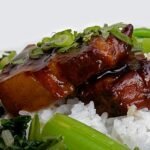
Hunan cuisine comes from Hunan Province, in south central China. It is known for being very spicy, often described as “bold and fiery”. It uses a lot of fresh red, green and yellow chili peppers, shallots, garlic, “duo la jiao”, a kind of fermented chili paste, smoked meats, pickles, ginger, and a kind of balance between hot and sour tastes. The photo on the right is red braised pork belly served on rice. Some famous examples are Dong’an Style Braised Chicken, Smoked Tofu with Leeks, Changsha Rice Vermicelli, Mala Chicken, and mashed shrimp in lotus pod. Hunan cuisine is considered the spiciest of the 8 major cuisines of China.
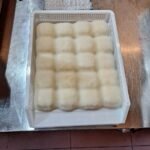
Anhui cuisine comes from Anhui Province in the south east of China. It is known for simple cooking methods and uses a lot of wild game and herbs. It is a landlocked province with many fields and forests, so it uses a lot of meat and vegetables from these areas and less seafood. Tofu is a famous food in Anhui cuisine. “Stinky Tofu” is a tofu that is fermented in brine, vegetables and meat, sometimes for months. It has a strong odor but a mild taste. The photo on the right is “hairy tofu”, which was invented here hundreds of years ago. It is a kind of tofu that is inoculated with a fungus and then fermented. During fermentation, this fungus grows on the top of the tofu, giving it a hairy appearance.
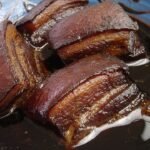
Zhejiang cuisine is from Zhejiang Province in eastern China. It is known for light and relaxed flavors and for not being spicy. It uses a lot of fish and rice. A lot of the fish are freshwater fish, which is different from many of the other regions. It uses Shaoxing wine to add flavor to many dishes. Bamboo shoots are also very common. The photo on the right is Dongpo Pork, which is pork belly braised in soy sauce, brown sugar and rice wine. Zhejiang food tries to avoid really strong seasoning and instead focuses on bringing out natural flavors. An example is Longjing Tea Shrimp, which is freshwater shrimp cooked with green tea leaves. Pian’er Chuan Noodles is a soup made with bamboo shoots, vegetables and pork.