
Getting around China is usually very easy and convenient. It has a sophisticated high-speed train network that connects all the cities. Air travel is also sophisticated, with many spacious, high-tech airports serving all the major destinations. Prices are much cheaper than in western countries. For local destinations, taxis are very reliable and ride-sharing services using the DiDi app are also very good. Public buses are everywhere. Tourists can also buy a package that takes care of all their hotels and transportation for them.
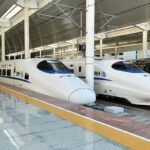
High-speed trains in China are cheaper than airplanes and move really fast, around 120 to 240 mph. The seating areas often look like an airplane, with attendants, TV’s, phone/computer charging stations, clean bathrooms, sleeping cars, and food services. Like on planes, there are classes, such as first class, business class and economy. China has the largest high-speed train network in the world, accounting for roughly two-thirds of global travel, about 50,000 km of track.
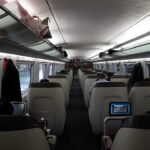
Slower trains are still common, and are even cheaper than the fast ones. However, for most tourists, the high-speed trains are very affordable and more comfortable. G trains are the fastest, known as gaotie. D trains are slower, but still pretty fast. C trains are used for local destinations around cities. Some business class cars have seats that fully fold down. Seats are wider in first class, just like a plane. Wi-Fi is often free for all classes. The app, Travel.com, is a good place for foreigners to book train tickets. This app is offered in English and other languages and is designed to help tourists buy tickets. Use your passport to verify your identity. Unlike American trains, which are slow and often have many stops, Chinese train tracks are often unimpeded by the towns they pass through, with the tracks going over the towns or even right through buildings, which allows them to maintain high speeds for a faster trip. Maglev trains use magnets to levitate the train slightly above the tracks, and many high speed trains are electric, which means a quieter ride. For example, if you want to go from Shanghai to Beijing, that is over 1300 km and a typical G train would take around 5 hours and an economy ticket would cost around $90 USD. This is about the distance from New York to Chicago. Shorter trips, such as Shenzhen to Guangzhou, would only cost around $10 USD and take an hour.
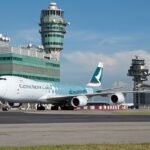
China has some of the world’s best airports. Hong Kong is especially impressive, with literally miles of terminals that you can walk through, numerous shopping malls, a 5 star hotel called the Regal, a movie theatre, 24 hour lounges with showers and baths, luxury reclining chairs in the waiting areas, and a huge variety of restaurants. It even has an underground train to connect various terminals. You see people shopping for gold watches and imported wines. Wi-Fi is free everywhere. There is a large sky garden inside the terminal that has landscaped greenery, birds, walkways and benches for passengers to relax among flowers and trees. There are several luxury lounges as well. All of the large airports in China follow a similar model. Most of the planes are either Boeing or Airbus, so you will usually be flying on the same types of planes you are used to in western countries. The service on board however, is at a much higher standard. While domestic flights in the US often provide only minimal service, such as a bag of peanuts if you’re lucky, Chinese planes usually offer more food and services. They are also much cheaper than US flights, with a typical one-way ticket from Hong Kong to Shanghai costing around $250 USD. Also, from airports like Hong Kong, tourists can fly to many popular countries like Japan, Vietnam, Thailand, and Korea for just a few hundred USD.
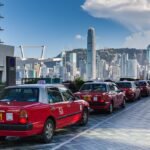
Taxis in China are usually marked with official identification, but you do have to be careful because there are many black-market cabs that will scam you if you accidentally use them. Keep in mind that city trains in China will suddenly shut down late at night, say at 11:30 PM, with no warning. If you are not aware of this, you might find yourself stuck at whatever station the last train stops at. Black market taxis will often hang out around these stations looking for stranded foreigners. If some guy comes up to you offering a taxi, it is not a taxi. Official taxi drivers do not hang out in train stations soliciting customers. Hailing a cab in China is similar to the US. You can put up your arm or simply approach them when they are parked along the street. They will have official identification on them. On the other hand, rules for taxis in China are often less formal. The Marriot hotel may, for example, call a taxi for you and it will be some guy in his private car. The seatbelt will not work and his 8 year old daughter’s coloring books will be on the seat next to you. He will drive 70 mph and weave in and out of lanes. That is China.
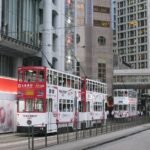
Many cities like Hong Kong have trams. These are iconic and a fun way to see the city. Tickets are very cheap. Public buses are everywhere. They are cheap and can take you anywhere in a city and to many rural places that trains would not go to directly. Many cities have charter buses for tourists and double-decker buses for sight-seeing. Some of them are large vans, while many of the luxury buses are similar to first class train cars. However, in less developed areas, the buses will be very spartan. No bathroom, not very clean, and expect to be packed in there with a lot of people. For travel to less-developed areas, a private car may be better. Finally, you have motor bikes, electric bikes and regular bicycles. These are everywhere and can be purchased or rented. Electric bikes can be recharged at charging stations by scanning a QR code with your phone. It only costs around a dollar. In large cities like Shanghai, it is common to see 6 motor bikes side by side coming down the road, with groups of 50 or more, so you have to be careful when crossing the road. Food delivery drivers always ride motor bikes and they are really convenient because you can go anywhere and fit into narrow alleys and parking places. A lot of people cannot afford cars, so motor bikes are affordable for everyone.